PC gaming 101: Part 3: Be a Smart Buyer

PC gaming is quite big in India. As games become more intense and compelling, gamers find themselves wanting the latest and greatest hardware to run these games smoothly. That being said, the majority of gamers wanting to build or upgrade their machines don’t have much of a clue, and are often at the mercy of vendors and salesmen, due to which, more often than not, they end up making the wrong decisions. This is an attempt to address this lack of information, and help all PC gamers make the best of their resources. This is PC GAMING 101.


The “More RAM equals better Graphics card” Myth

An age-old trick of most Indian video card vendors is the whole “it’s got more video memory” trick. Most people don't really understand the specifics of video cards, and end up getting duped by vendors who convince them that a card with more video memory (or video RAM) is better or “superior” to a card with less RAM.

ramNO

First of all, just because a GPU has more video RAM doesn’t make it a better or a faster GPU.

Simply speaking, GPU video memory these days is either DDR2 or DDR3, just like RAM. DDR2 memory is the cheaper of the two. DDR3 is newer and faster.  Vendors usually just mention the amount of video memory on the card, and not what type of memory it is. So, a card with 1.5 GB of DDR3 memory may actually perform better than a card with 2GB of DDR2 memory, despite the latter having “more RAM”.  Knowing the type of memory is thus equally important.


“Most people are uninformed and salesmen easily dupe them. A salesman once tried convincing me that a card with 2GB of RAM was superior to a card that cost thrice as much but had lesser, but DDR3 RAM! These people are unscrupulous, and take advantage of the average buyer’s ignorance.”

says Kartik Iyer, a PC gamer. Don’t get fooled by vendors who try to sell you cards by telling you that it’s got more RAM.

That being said, if you’re assembling a PC and you want to future-proof it, the rate at which the system requirements of PC games are going higher, cards with 1GB of video RAM or less won't cut it for much longer.  So, for a future-proof PC that'll last you for two or three more years, try getting a card that’s got a video memory of 1GB or more, but be sure to check the type of memory present in it.

It’s not just Nvidia and AMD Radeon

When it comes to graphics card brands, most of us know the two major brands- Nvidia, and AMD Radeon. So it’s just a matter of which one of these to choose, right?

It’s not that simple.

Nvidia and AMD Radeon do manufacture cards themselves, but there are also many other manufacturers who simply use the card designs, slap their own names on them and sell them. Thus there are two main categories of cards- Reference and Non Reference.

A reference style GPU usually means that the card is presented as the GPU maker had intended (Nvidia and AMD). this includes everything from the PCB, layout of the components and the heatsink/fan.

A non-reference card is when the card manufacturers (like Gigabyte, Asus, MSI, Sapphire and Zotac, to name a few)  make changes that deviate from the original design. These changes can be something like a better heatsink/fan design, overclocking, changes to the PCB or any other changes that they see fit to make.

Reference versus Non-Reference cards

Reference cards are always in-line with the specifications provided by the main companies, and have a certain level of quality about them. However, manufacturers often prefer to tweak the stock settings like the processor speeds, cooling systems etc. to differentiate themselves from the market. Hence for a particular model number you might find various different "editions", like "gaming edition" or "extreme edition" and so on, which offer some level of customizability in terms of things like Overclocking and Cooling. However, although these non reference models offer some improvement over the basic reference design, some companies often use cheap components and manufacturing methods to keep costs low. Rishi Alwani, PC gamer and occasional game reviewer says:

“Don’t buy Zotac! The prices are low but there’s no real guarantee that your card will run for long. I’ve used Zotac cards in PC builds before and I ended up replacing them due to faults and malfunctions, so be careful while getting low-cost cards!”

All in all, you'll need to do quite a bit of research and comparison to get the best card, and the best deal.

Research- make an informed choice

Research is essential before buying graphics cards, as y’all already know. The problem lies in the fact that there are so many sites on the internet that offer conflicting, confusing and even sometimes misleading information. Here’s a list of websites you should go to for your researching needs:

1. Anandtech: A website dedicated to tech reviews, both hardware and software. Great for reading reviews.

2. GPUreview: Dedicated to graphics cards. Offers a neat comparison tool that allows you to compare two cards side by side, and look at each individual specification.

3. HardOCP: Great website that offers reviews and news about the latest computer hardware.


Think of the System as a whole

When buying a card, make sure that the card you buy is right for your system.  A low powered GPU might act as a bottleneck for a system with a powerful CPU, and a high-powered GPU on a lower end system might be a waste of money. Jayesh M, a PC enthusiast says:

“Make sure your system is correct. If you buy a GTX 660 but got a powerful i7 processor, you are wasting your system potential, or vice versa.”

While buying a card, it’s also prudent to know the resolution of your display. If you have a display that’s 1920X1080 aka an HD display, spending more than 20k on graphics equipment is a waste of money, says Rishi.

Now that we’ve gone through what’s needed to buy smart, we will go into the details of some often ignored but important things- starting with Display technology. Stay tuned folks!

Follow Rishi on twitter: https://twitter.com/slackerninja

Rishi's blog: http://slackerninja.com/

Follow Jayesh on twitter: https://twitter.com/jayesh

(Logo credits: Jui Pandya)

Prev>> Part 2: Knowing What You Want

Next>> Part 4: Display Technology Explained


PC gaming 101: Part 2: Knowing what you want

PC gaming is quite big in India. As games become more intense and compelling, gamers find themselves wanting the latest and greatest hardware to run these games smoothly. That being said, the majority of gamers wanting to build or upgrade their machines don’t have much of a clue, and are often at the mercy of vendors and salesmen, due to which, more often than not, they end up making the wrong decisions. This is an attempt to address this lack of information, and help all PC gamers make the best of their resources. This is PC GAMING 101.


Now that we’ve talked about knowing your initial configuration and the PSU, let’s talk about one of the most important component in a gaming PC- the Graphics Processing Unit, or the GPU.

If you’re a PC gamer, you’ve most probably heard the term “GPU”. Commonly called “graphics cards” here in India, every gamer wants the best GPU they can get. But, with a lot of buzzwords and marketing fluff being thrown about these days, it’s easy to get totally confused and lose your way. Here are the things a person wanting to buy a GPU must remember to make the best and most informed choice:


Select a Graphics card based on your usage

The first thing that needs to be considered while buying a graphics card is what the system is going to be used for.  This is because there are different kinds of video cards available for different types of users. The cards built for gaming have gaming specific feature sets and hardware, and gamers should be just fine with the usual Nvidia and ATI offerings. However, if the system is to be used for other tasks such as video editing, video recording and 3D modeling, you might want to consider investing in a card that’s specifically designed with these tasks in mind, like the Nvidia Quadro or the ATI FireGL series. But that’s a totally different feature set, a totally different price range and a totally different kind of usage scenario from gaming.

So, bottom line: Gaming: GeForce/Radeon Workstation applications: Quadro/FireGL

Differences between Workstation and Gaming Graphics Cards

You can in fact, use a gaming graphics card for workstation applications- but the gaming card won’t do the processing as fast as a dedicated workstation card would. The math involved in 3D modeling, video rendering and other such content creation is quite different from what’s involved in gaming. So although on the surface a gaming card may appear to have similar or even superior specs than a workstation card, the latter is designed specifically for such CAD applications. So you’re better off getting a workstation card if you’re into digital content creation, as these cards are optimized to run those types of algorithms, that kind of software, and you’ll be able to get work done faster.


In part 3, we'll go further into the details of what the things that every PC gamer should know before purchasing a graphics card.


(Logo Credits: Jui Pandya)

Prev>> Part 1: Initial Configuration and the PSU

Next>> Part 3: Be a Smart Buyer

PC Gaming 101: Part 1: Initial Configuration and the PSU

PC gaming is quite big in India. As games become more intense and compelling, gamers find themselves wanting the latest and greatest hardware to run these games smoothly. That being said, the majority of gamers wanting to build or upgrade their machines don’t have much of a clue, and are often at the mercy of vendors and salesmen, due to which, more often than not, they end up making the wrong decisions. This is an attempt to address this lack of information, and help all PC gamers make the best of their resources. This is PC GAMING 101.


If you’re a PC gamer, you’ve most probably heard the term “GPU”. Commonly called “graphics cards” here in India, every gamer wants the best GPU they can get. But, with a lot of buzzwords and marketing fluff being thrown about these days, it’s easy to get totally confused and lose your way. Here are the things a person wanting to buy a GPU must remember to make the best and most informed choice:


Know your PC Configuration

When looking to upgrade your PC, it is absolutely essential to know the specifications and configuration of your PC.  This is a seemingly obvious but often overlooked step.  With some amount of looking up, one should be able to find out specifications like the model number of the motherboard, amount and type of RAM, existing cooling system (cooling fans etc) and the CPU cabinet. However, one of the most important things that must not be overlooked is the Power Supply Unit, or PSU.

The PSU

The power supply unit is the component of the PC which converts the power from the outlet, into usable power that drives all the different parts inside the computer. From a PC gamer’s point of view, what’s important is knowing the power rating. The power rating is mentioned on the PSU itself, and one just needs to open the CPU cabinet to take a look at it. The PSU looks like this:

psu_1280


And the voltage ratings can be found on the sticker on one side:

psuSticker


The different columns under “voltage” are called “rails”, and one must note the power output for each rail along with the maximum power output. Why this matters is, GPUs generally have certain voltage requirements, which if aren't met, might cause serious issues, malfunctioning or may lead to the system not working at all. “Knowing the power supply requirements is essential. I had my graphics card lying idle for a year because it needed a better power supply” says Kartik Iyer, an avid PC gamer.

So be sure to check if the wattage of your PSU matches the recommended PSU wattage specified by the vendor. (Note: the recommended wattage is for the entire system and not just the GPU, so be sure to calculate the power requirement of the whole system) .

Here’s a handy tool that will help you to calculate the total power requirements for your system.

Stay tuned for part 2, where we'll talk about getting the right GPU for your usage.

(Logo Credits: Jui Pandya)

Next>> Part 2: Knowing What You Want

The Peppered Moth

I wrote this a long while ago, when I was going through a phase of life full of upheavals. All characters may or may not be based on real people, but everything is mostly symbolic. 

Little worthless peppered moth keeps flinging itself into the light knowing full well it would kill him. His soul seeped out through his perforated shell existence, he who was not himself anymore. He changed too much too fast- too much agony, too much ecstasy; he longed for a life of solitude.

He saw the dark princess in her high tower, her heart the deepest darkest black, a heart of stone, absolutely and purely evil, yet unbeknownst to her. 

Handsome seeker, with his riches and promises and silver tongue did ascend the stairs of the tower and win her over, and the little peppered moth heard his existence tear apart in front of him; he was but a moth, slow, ugly and faceless, with no world of his own. He still flung himself into the light for he knew he must kill a bit of himself to find a bit of himself so he could finally appreciate himself. 

Before this morbid “revelation” could kill him he did chance upon another chance. He thought he’s get a new life, but the light still blinded his thoughts. The evils of the dark princess and her new handsome suitor stung and burned and seared his tiny moth wings, he tried to love himself and the other but his thoughts floated around in his mind like dark apocalyptic clouds, like a chain binding his weakened psyche, not letting go, not letting him go. 

So, if one finds such a needlessly morose peppered moth floating around blindingly shiny lights lit by dark princesses while having so obviously found a cause, yet burdened by nonexistent worries –

Put him in a dark box. 

He will perhaps find some solitude, his “true self” even. But beware, 

When you touch and hold the wings of a moth, some of the color rubs off on you.


Dex-Off: Dimensions of Vengeance

Here’s the story I wrote for the “Creative Writing” Competition at Symphony 2014, the cultural festival of my college, KJ Somaiya College of Engineering. I wrote this story in the final round, in which each contestant was asked to create a story out of two characters, randomly selected by picking chits. I got Dexter, and Shakuntala.   

“At last, my greatest invention is complete!” shouted Dexter, boy genius, not a name heard of in quite a while, his name was, shall we say, splattered with blood. “I will now rid the world of all crime! There will be no bloodshed, not anymore. And it shall begin with… who else?”

Of course the great boy genius was none too pleased with this new pretender, the “dark passenger” serial killer vigilante, his namesake Mr Morgan. The plan was simple. No, it wasn’t time travel, it was inter-dimensional travel. He wished to wipe out Mr. Morgan, using science.
The machine was ready, the vacuum tubes were primed, the the capacitors were charged, the fan blades purring softly. He stepped into the pod, dialled in the numbers, and pressed the button. 
Shakuntala, the queen in exile, was distraught. Her husband had no memory of her, and there really wasn’t much she could do. 
As the dimension machine was on its journey, Dexter realised something wasn’t right. He’d picked the wrong time for the mission, in his impatience.  As he hurtled through space-time, celestial bodies and whole galaxies flitting by, taking grotesque shapes, he waited until he could find a good enough place to land. He waited for the machine to slow down and picked the opportune moment.
Shakuntala lay weeping by the riverside when she heard a crashing sound from somewhere in the jungle. She went to investigate. As she came to the source of the sound, she saw the dimension machine, and the boy genius crawling out of it.
The exiled queen was awestruck by this occurrence. As dexter got out of the machine and came back to his senses, he was quick to decipher where he’d ended up, and he used his super handy ultra translator to try and communicate. 
After some initial hesitation and pure shock, Shakuntala finally began talking to Dexter. (Some mind calming rays may have been involved)
                                                                                              –x–
Dexter Morgan sat brooding, on the front porch of his house. Life hadn’t been kind to him and he sought solace in death- the death of others. He was a vigilante, a man who brought painful renegade justice to the hidden evil men lurking in the darkest corners of society, hiding in plain sight behind smiling countenances. He knew his past and he cared not of his future, but he was running out of ways to keep his bloodlust at bay. 
The days were the same, and so were the nights, the seasons and the weather. But he could sense that something was not the same. He felt something otherworldly, an ungodly and unsettling force pulling him towards some unknown direction. He dismissed it as mere hallucination and delusion but he soon understood that this was not like anything he had felt before. He had visions, of being watched. Hundreds of thousands of fingers pointing and waving at him, of eyes gazing at him through some unseen windows. This was not his lust for blood speaking to him, no, it was something much more profound and inexplicable. 
                                                                                               –x–
“We must make haste, there’s not much time!” said Dexter to the queen. He had to find a portal, a rip in the fabric of space-time that could be his way back home and back to his quest. “You seem to know much beyond anyone else of your age” the queen said, astounded. Seeing that they both had nothing but time, the both of them had talked to each other at length, about their lives, their stories and their predicament. Dexter bemoaned the cyclic nature of his life- day after day, things would come and go, all to unfold in a manner as if it were ordained by someone else. Shakuntala on the other hand was resigned to her fate, she knew not what the heavens had ordained for her. The future was a blank scroll of parchment, and the pen wasn’t in her hands. 
Dexter asked her how she could be so calm in her plight. “What has happened was beyond my powers. That being said, I can’t just crumble and fall apart. I have to live not only for myself but for my son and for the hope that the future will be better still!” 
Dexter being a thorough rationalist, believed in following a logical order of things. He believed that if there was a thing to be done, it could be made so, with his own free will. He made an entire laboratory full of the most wondrous technological marvels, and although his inventions were ruined many, many times, it never deterred him from making even greater things, or going on even greater adventures. The both of them were similar in that respect- their steely resolve to face the situation. 
Dexter fixed the central navigation console of his dimension machine. He needed to scout the location of the time rip and get to it as fast as he could. He tuned the jog dial till he could find the resonating frequency, and after some careful calculations he triangulated the location with pin-point precision. As he found the time rip however, on the console screen he saw a face, all too familiar- the face of a brooding, silent Mr. Morgan. 
                                                                                                 –x–
As the boy genius approached the site of the time-rip, clad in his dimensional travel suit and visor, armed with his plasma pistol and the desire to right the wrong, he could feel the strengthening of the dimensional pull. The dimensional pull was a very peculiar phenomenon indeed- theorized but never seen in reality. It was a force that extended beyond the realms of space-time and dimensions, and could be felt by two people, the antitheses of each other in every way, and could lead to catastrophe if combined. Matter and antimatter, yin and yang… all romanticized illustrations of this ancient wisdom. The truth was far from it though. Humans couldn’t fully fathom or decipher this pull and the subsequent annihilation that would ensue. They separated the two aspects as that is the only way a human mind could make sense of the whole thing. It was just a whole lot of grey- an unresolvable, unfathomable pull. 
And thus the boy genius and the vigilante would meet, the proverbial collision between dimensions was about to  unfold. 
                                                                                               –x–
As Dexter Morgan sat brooding on the front porch, he suddenly felt a jolt. It was as if the whole world around him was falling to pieces, melting away in a haze, he was being pulled into a deep abyss- and it all went black. 
When he opened his eyes he saw the tiny frame of the boy genius looking straight into his eyes. He didn’t know where he was or how he came there, but he didn’t need to be told- it was as if his and this little boy’s minds were intertwined, in a subtle yet furious dance, a struggle for power. 
Furious, he stood up to face his adversary, eyeing him from head to toe. He looked at the pistol in his opponent’s hands and then he looked into his eyes. Both of them were waiting in this standoff, when Shakuntala intervened. 
“Can you not see? Do you not know?” she screamed at the both of them. “In your quest for vengeance, you will destroy yourself!”
“Myself?” said the boy genius, puzzled. And then it struck him. All his equations and theorizing had been veiled by his own quest for retribution. There was no black nor white- the grey, the grey…. it all made sense to him. Dexter wasn’t any different from Mr. Morgan- he WAS Mr. Morgan. The wisdom of the ancients though spoke of two halves, spoke of harmony, and of balance. It was now that he understood the true sense of the annihilation. 
“I think I owe you an apology, Mr Morgan” , said the boy genius. And finally, Mr Morgan broke his silence. 
“I think this explains what I’ve been feeling all this while” he said, knowingly.
Shakuntala looked at this other worldly exposition and said “There is much darkness in your heart, fair traveller. You have made it your own. This boy here, in childhood’s pride, wished to destroy you. He thought of himself as the light to your darkness, and thus made it his mission to destroy this darkness. Alas, he let his pride get the better of him. But God has his mysterious ways, and in bringing the two of you together, he has shown that the two of you are one and the same, and it is necessary for the both of you to exist in unison, but differently.”
The two dexters looked at the queen, and said, 
“Isn’t there a king that needs remembering?”

Smartphone Battles of 2014- Hype, Disappointments and an Unexpected(?) Winner!

The mobile tech annual release cycle is in full swing, and with CES and MWC out of the way, we have now seen most OEMs announce and launch their flagships for 2014 (with the notable exceptions being Apple and LG). The embargoes have lifted, the blast of buzz has come and gone, and the length and breadth of the internet is stocked full of articles, editorials and blog posts. Comment threads have burst into activity with haters and defenders, and now lay dormant for the most part. It’s around this time that the tech press says that “The dust has settled”, but I beg to differ. As from how I see it, none of the top OEMs- be it Samsung, Sony or HTC have kicked up any dust in the first place. 

It’s the time of year when the tech enthusiasts of the world begin forming their opinions about their choice of “Best Flagship of 2014”. A glut of video reviews, unboxings, hands-ons, benchmarks… everything is following the pattern we’ve all come to know of and whether you love it or loathe it- all this talk does affect us in some way. 

This year though, I grew weary of this mobile tech release cycle right from the start. All the leaks, the speculation, and the discussions pointed to yearly refreshes in hardware with some gimmicks slapped on as an afterthought, and in that respect, each and every major OEM so far has followed the trend, so to speak. There were many who hoped for something unexpected, but those hopes were crushed soon enough, and I don’t expect LG or Apple to break the mold, either. 

While I’ve been disappointed by new releases in the mobile tech space for quite some time now, there are times when I really feel like I want a certain device. This phenomenon was very prevalent when I first began following the tech space closely back in 2010. Back then the space was quite different in many ways, android was laggy, processors were beginning to go dual core, and feature phones made up a major chunk of the user base. It was then when I was truly enamored by the Asus Transformer. The design, the specs and the laptop-tablet hybrid form factor really wowed me. Then came the Galaxy S2 in 2011. Since that time though, due to increased coverage, more detailed leaks and the simple face that a lot more people now carried smartphones, annual releases just seemed all too evolutionary. Beefier specs, bigger screens, more ostentatious gimmicks and crazy amounts of marketing- “true innovation” seemed to be lost somewhere in the midst of all this. 

MWC happened this year, and an insane amount of coverage followed it. But amidst all the devices that were announced and launched there, there was one that really caught my attention- the Yotaphone. And after a long time, I felt truly enamored by a device once more. That’s right, my top pick for smartphone of the year, the one to trounce them all, the one I really, really want- the Yotaphone 2014. 

To me, this device brings the best hardware together with the most useful “marquee feature”. The device packs beefy specifications and a good design- but the real story is about what’s at the back- a a multi-touch, color, e-ink display. 

I’ve been using a smartphone for more than two years now, and I know the things people have to deal with when using a smartphone day in and day out. One of the most important considerations though, are battery life, and outdoor visibility. 

Phones these days come with battery packs much beefier than the lowly 1500 MAH battery my device uses, but the battery life situation is more or less the same- upto a day’s worth of moderate to heavy use on a single charge. No matter which phone you have, you’re going to need to plug it into a charging socket daily if you use your phone extensively and want to keep using it. Check the battery usage stats on your device, and you’ll see that the display (screen on time) amounts for a major chunk of the power consumption, and it doesn’t matter whether its an LCD or an AMOLED panel, the more you keep the display powered on, the more battery it’s going to consume.  

Another thing smartphone users have to deal with is poor outdoor visibility. If its too bright outside, you’re going to have a hard time trying to look at your phone’s display, and you’ll find yourself shielding it with your hands making it an overall cumbersome experience. 

The Yotaphone’s secondary e-ink display does away with both those problems very elegantly. For the uninitiated, E-ink displays use a fusion of chemistry, physics and electronics to provide an easily readable display that consumes very less power. One of the most important differences between generic displays and an E-ink display is that while normal displays use backlight to project images, E-ink displays use the ambient light of the surroundings, reflecting it back into your eyes. 

Secondly, E-ink displays don’t need a continuous power supply to work. The display uses special pigments that turn white or black based on an applied positive or negative electric field. Moreover, the new Yotaphone has a color E-ink display rather than a standard black and white one found on eBook readers, allowing for much more functionality. 

The addition of this secondary display also helps outdoor visibility as it has a “matte finish” and no backlight, thus mimicking the look of ink on paper. 

E-ink technology consumes less power, is easier to read and has a longer shelf life than traditional LCD/AMOLED displays. However it’s the secondary screen for a reason- E-ink displays in their current incarnation lack the vibrancy and sheer color gamut that other backlit displays provide. Low light visibility is also another factor. All these factors notwithstanding, an E-ink display can really come in handy when the phone is low on battery and you want to continue working, for example if you’re using maps to navigate. Also, it allows you to get a screen shot of the primary display, and view it even when the phone is switched off- a truly welcome, functional feature with many practical uses. 

A secondary E-ink display at the back of a phone is a good thing. But a secondary E-ink display that supports multi touch and has more colors than just black and white? That just knocks it out of the ball park for me.

The Yotaphone may not have the latest in fingerprint recognition, or heart rate monitors, it may not have the dust and immersion resistance ratings or a glut of gimmicks backed by a marketing machine or the latest in image sensing, but what it brings to the table is a practical and highly useful, truly innovative blend of hardware and software, with the end user kept in mind. 


var options={ “publisher”: “2814c680-1ca3-4692-a110-0627022150af”, “position”: “left”, “ad”: { “visible”: false, “openDelay”: 5, “closeDelay”: 0}, “chicklets”: { “items”: [“facebook”, “twitter”, “googleplus”, “stumbleupon”, “pinterest”, “digg”, “reddit”]}};
var st_hover_widget = new sharethis.widgets.hoverbuttons(options);

Meh-bile World Congress: MWC 2014 Views

There was a time when I was enamored by MWC. Back in 2011, I was a mobile tech virgin, a newbie who quickly fell in love with the hallowed event held in Barcelona, a gathering of every major OEM (Original Equipment Manufacturer, the ones who make phones) present there to announce their new devices and their roadmap for the future. These days however, with leaks, an overabundance of tech reporters and the understandable plateauing of hardware specifications, in 2014 it doesn’t seem to be too enticing to me. 

It wasn’t all that bad however, so here’s a look at all the interesting and not so interesting things at the recently concluded MWC 2014. 

1. Blackphone

I’m going to start off by talking about an interesting concept called Blackphone- a joint venture by Spanish manufacturer Geeksphone and the security company Silent Circle. This is a smartphone running a modified build of Android, tweaked to provide better security by ironing out some security flaws. Called PrivatOS, this security oriented android build is totally compatible with all other versions and does not create any fragmentation. It apparently uses better crypto engines and will get direct and frequent updates from the company itself. 

The feature set includes secure phone calls and messaging using a secure network provided by Silent Circle. It also provides a remote wipe feature in case of misplacement or theft, which does not involve any third party companies or cloud services, and a host of other features like a VPN service without the advertisements and resulting overheads and slowdowns. 

The million dollar question here is, how secure is this device, really? In the wake of the NSA revelations and the heightened awareness (or hype) surrounding data privacy, will the Blackphone concept really keep data away from the prying eyes of the Governments and corporations of the world? 

The security features that the Blackphone project aims to provide, act at the application level. This means that although these features give users the appearance or at times the illusion of privacy, there might be some undiscovered vulnerabilities that a hacker worth his/her salt will be able to exploit. Application level security solutions do not have access to low level hardware or resources such as a phone’s radios and the baseband and if someone really wanted to access your data, that’s probably what they would use to get to it. 

Such security feature packed devices bring with them a totally new problem- a false sense of security. 

2. Yotaphone 2014

By far one of the coolest things at MWC, the new Yotaphone brings the dual-screen aesthetic with the latest in terms of hardware under the hood. A Snapdragon 800 processor powering a 5 inch 1080p primary display and an 8 megapixel camera amongst the usual things that make for a flagship or thereabouts device today. What’s interesting about it though, it’s what’s at the back. A curved, full touch, electronic paper display, (or e-ink display). E-ink displays are found in eBook readers like the kindle, and use very little power. The yotaphone has a monochrome e-ink display at the back, and the ability to display information or updates like scores or fitness stats. Developers can use the Yotaphone API and take advantage of the e-ink display. This secondary display can come in handy in situations like navigation, where if your phone’s running out of juice you can simply switch over to the display at the back, which can also store a screenshot of what’s going on at the front. 

The only issues with this device are availability and pricing. By the time this releases the specs won’t really be flagship, and if you’re a spec junkie that’s a bit of a problem for you. Also the pricing.

3. The Rest

The rest was the usual fare from the heavyweights- Samsung launched the Galaxy S5 at the unpacked event, and although it’s a good device with top of the line specifications in and of itself it’s exactly what everyone had come to expect from it. A slight refresh, with the fingerprint scanner, the bigger camera, and updated internals. What I found peculiar about the S5 was the inclusion of a heart rate monitor at the back. The new galaxy gear lineup has heart rate monitors included and that seems to be a much more intuituve usage scenario.

Sony announced the Xperia Z2, the Tablet Z2 and a mid range phone. Same old sandwiched glass, same IP fifty-something dust and water resistance, etc. 

LG announced a host of new devices.

In conclusion, the Mobile World Congress wasn’t too exciting for me, because

  • Everything was leaked and known to everyone beforehand
  • The spec war is reaching its long and drawn out conclusion, the next frontier of battle for the OEMs to slug it out is hopefully software
  • Did you see the amount of reporting that went on?   


stLight.options({publisher: “2814c680-1ca3-4692-a110-0627022150af”, doNotHash: false, doNotCopy: false, hashAddressBar: false});

var options={ “publisher”: “2814c680-1ca3-4692-a110-0627022150af”, “position”: “left”, “ad”: { “visible”: false, “openDelay”: 5, “closeDelay”: 0}, “chicklets”: { “items”: [“facebook”, “twitter”, “googleplus”, “stumbleupon”, “pinterest”, “digg”, “reddit”]}};
var st_hover_widget = new sharethis.widgets.hoverbuttons(options);

Ingenious Touchscreen UI for Cars

An Ingenious "Eyes-Free" Touch Based Interface for Cars

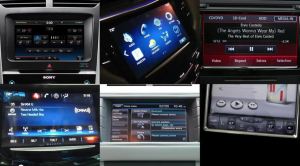
Cars these days have a lot of features built in to “enhance the driving experience”. Radio sets, central controls, GPS navigation, CD players… and for every new feature that’s added into the central console, there’s an ugly, unintuitive, horrible user interface. On one hand you might have knobs, buttons and dials that can be used without looking, or you can have a touchscreen interface that’s a but better to look at, less clunky, but requires you to take your eyes off the road. There’s always a tradeoff between form and function, visual appeal versus ease of use. 

Touchscreens today

Touchscreen Interfaces on cars these days, too similar to the button/knob paradigm that preceded it.

Touchscreen Interfaces on cars these days, too similar to the button/knob paradigm that preceded it.

The touchscreen interfaces found on cars today are Skeuomorphic. They adhere to the same layout, the same design language and basically the same way of interaction as the preceding standard, buttons-and-knobs, changing only the input method, which is the touch screen. Skeumorphism is not a bad thing in and of itself, Resemblance to real world objects helps understand and learn things better, as is seen in smartphone operating systems today- iOS and android use icons, text and buttons to great effect. 

However, there is a great difference in the usage scenario here. Smartphones can get away with skeumorphism because the user of the device looks at the display, and not anywhere else, while operating it.

While driving a car, the driver’s attention needs to be on the road. Touchscreen interfaces, in the form that they are in today, can’t simply be ported over for use in automobiles.  Virtual buttons and knobs offer no tactile feedback, and the user needs to search for the button every time.

A new solution

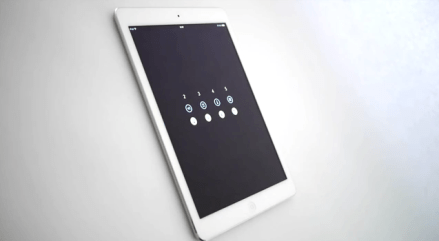
Designer Matthaeus Krenn has created a touch based user interface that can be operated completely without

 A car UI that departs from traditional skeumorphism

A car UI that departs from traditional skeumorphism

having to look at it. Instead of buttons, icons, text or menus, the interface is based on the number of fingers used to touch it, and some gestures like pinching and swiping.  Dragging upwards with two fingers turns up the volume; dragging up with three changes the audio source. Four fingers controls temperature; five for airflow. Each has a unique sensitivity based on its function and can be triggered starting anywhere on the touch surface. Moving up or down with your fingers spread a bit wider offers an additional set of controls. All eight of these can be remapped to the driver’s preference.

This new UI seems totally built from the ground up specifically for touch devices. However, it will take some time and effort for users to train themselves and learn this new interface, something which the designer himself admits needs to be addressed in future iterations. The application is currently available only for the iPad, and can be downloaded here.

In the future…

This focus on building a new touch interface from the ground up is a welcome change, and a step in the right direction. New control methods can offer exciting advantages previously impossible. But they also come with their own set of challenges. 

Augmented reality is another aspect of human computer interaction that looks promising. A user interface that combines both touchscreen technology and augmented reality may very well be the way we interact with our cars in the future. Critical information popping up on the windshield of the car, or Heads up displays found in Sci-Fi movies and video games may not be a fatfetched prospect. The only issue here is that augmented reality displays on car windshields may distract the driver, defeating the purpose of it all.

What do you think is the future of automobile interfaces? Let me know in the comments!


stLight.options({publisher: “2814c680-1ca3-4692-a110-0627022150af”, doNotHash: false, doNotCopy: false, hashAddressBar: false});

var options={ “publisher”: “2814c680-1ca3-4692-a110-0627022150af”, “position”: “left”, “ad”: { “visible”: false, “openDelay”: 5, “closeDelay”: 0}, “chicklets”: { “items”: [“facebook”, “twitter”, “googleplus”, “stumbleupon”, “pinterest”, “digg”, “reddit”]}};
var st_hover_widget = new sharethis.widgets.hoverbuttons(options);

Internal Monologues EP2: Patchwork Nonsense

Will this chorus of voices silence the voices in my head? They tell me nothing. Hisses and brainwaves incoherent, I cannot comprehend. Words fill pages; the meaningless noise manifests itself into “free verse” with “many layers” and being open to interpretation. Eventually I awaken from this mental slumber, the fog wothin cleared and inside I see- nothing.

What I want is to be drowned in a deluge of the “worldless” … the unknown, etched in to paper with lyrical, rhetorical, fancy affirmations of my creativity.

“You just want the joy of solving a jigsaw puzzle” 

The infirmaries that nurture thought are being bombarded with grotesque visuals of sensual pleasures, the collective mind pool so very polluted by the so called wisdom of the people. 

War drums beating in the distance draw closer, greedy mongrels aiming their sights at the last bastions of freedom.

Watchful eyes look at me, but they are eyes full of warmth and radiance.

Glaring irregularities, brazen apathy, waves crash on to an unbreakable rock face. Wrath and passion so beautifully intertwined, the world alas, turns a blind eye. 

There are no ghosts or skeletons, the voyeurs immolate themselves for their cheap pleasures. The jesters and their gestures adored by all. 

“Are the airwaves enriched, or are they infected?”

Deadly concoctions abound, the deadliest in the guise of innocence. Potions that play with emotions, emblazoned on papers, imbibed in minds. 

The coffee cup is never truly emptied……

“Then spill it.”

Not a Prophet, nor a Preacher


Day after day

I wake up to a world

Desperate

To sell me it’s wares 

The world bears down,

We want to be free ,

Free to be enslaved

By pleasure 

It seems it is prudent

To be hellbent

On spending our lives –

Chasing.

This chase makes us weary

And thus we drown ourselves

Into a sensory overdose.

Thus,our senses overwhelmed,

And distracted ,

We run further

Until we can run no more. 

We must spend our lives,

Bringing the virtual

Into the physical

Latch ourselves by the skin ,

Onto marauding bulls

Of ambition.

And thus this game

Plays itself out

And we play along

Have a dream,

Or make one your own.